
Dr. Nimaming publishes his new work on interfacial dynamics in Food Chemistry
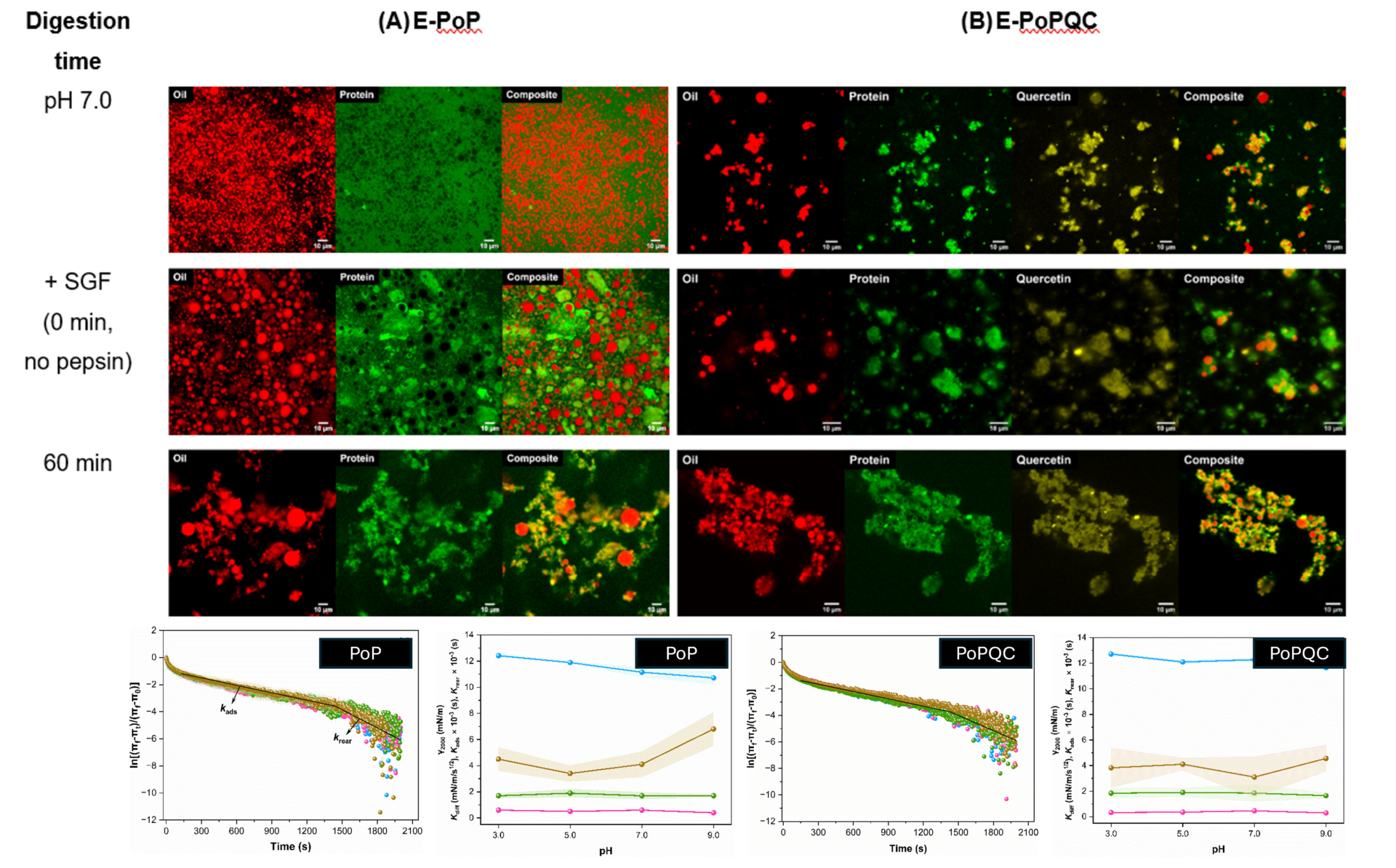
Dr. Nisufyan Nimaming (Former PhD Student, now lecturer at Rajamangala University of Technology Krungthep, Thailand) publishes his new work titled "Interfacial properties of plant protein–flavonoid hybrid particles: Towards influencing in vitro gastric digestion of emulsions" in Food Chemistry. This work elucidates an in-depth interfacial charcaterisation of hybrid potato protein-quercetin particles compared with native potato protein as a function of pH and ionic strength, alongside the in vitro simulated gastric digestion of the emulsions stabilized by these materials. Strikingly hybrid dispersions showed minor variations in particle size between pH 3.0–9.0, with limited aggregation at pH 5.0 unlike potato protein. The complexation of potato protein with quercetin limited the protein aggregation, particularly for pH 5.0, where the hydrophobic regions of potato protein were potentially masked by quercetin, hindering the hydrophobic attraction among protein molecules and promoting the formation of an elastic interfacial layer evidenced by interfacial shear rheology. Overall, the viscoelastic film formed by potato protein-flavonoid-based hybrid particles resulted in enhanced gastric stability such that hybrid particles-stabilized Pickering emulsions largely maintained droplet integrity whilst potato protein-stabilized emulsions demonstrated droplet coalescence. This was attributed to the robustness of hybrid interfacial layers of hybrid plant protein-flavonoid particles restricting the proteolysis during gastric digestion as well as providing the stability of hybrid particles at the interface. These results demonstrated that tailoring hybrid particles is an effective approach to controlling interfacial film behaviors in various environmental conditions, and enable gastric stability, making hybrid particles a promising plant-based Pickering stabilizer for controlled delivery applications. The full text can be followed here: https://doi.org/10.1016/j.foodchem.2026.150307